
Conveyor belt mistracking occurs when a belt moves away from its intended running position. Common causes include off-center loading, misaligned pulleys or idlers, material build-up, incorrect tension, splice defects and unsuitable belt geometry.
Correcting the problem starts with identifying where and when the belt moves off-center—not simply adding more tracking rollers.
A belt that runs to one side can create problems beyond material spillage. Persistent mistracking increases edge wear, places additional loads on conveyor components and may eventually lead to belt damage or unplanned downtime.
For mining operations, ports and other heavy-duty bulk handling facilities, understanding the cause is essential to choosing an effective conveyor belt tracking solution.
1. What Is Conveyor Belt Tracking?
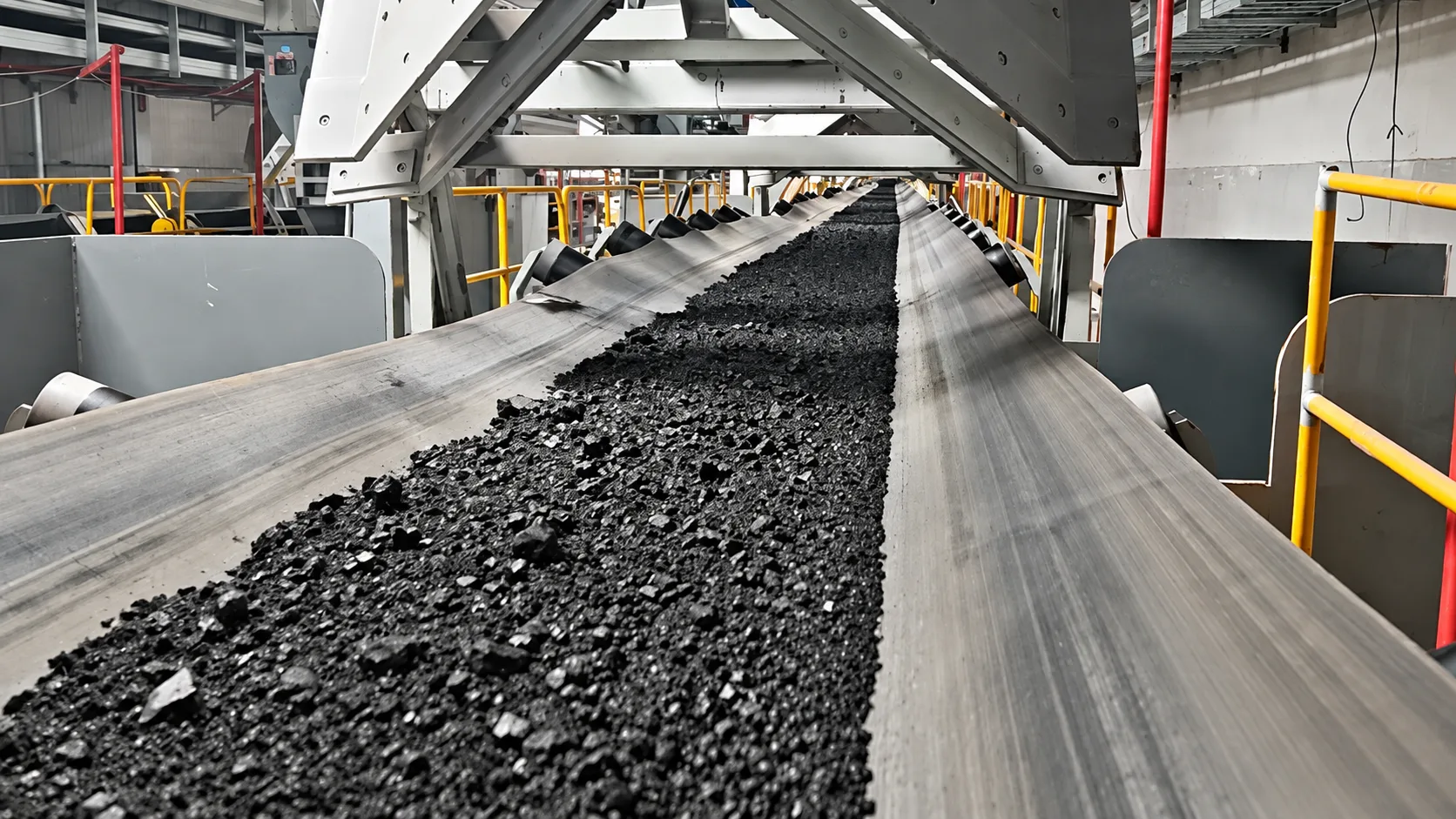
Conveyor belt tracking refers to the belt’s ability to maintain its intended position as it travels over pulleys and idlers.
A properly aligned belt follows a stable path through the carrying and return sections, with sufficient clearance from surrounding structures and equipment.
Mistracking, or belt misalignment, occurs when the belt deviates from that path.
Some variation in belt position is normal. A problem develops when the movement exceeds the allowable limits for the conveyor, causes material spillage, damages the belt edges or creates unsafe operating conditions.
The important distinction is that the belt does not operate independently of the conveyor.
Its running position is influenced by:
- How material is loaded onto the belt
- Pulley and idler alignment
- Conveyor structure and geometry
- Belt tension and take-up movement
- Belt construction and splice quality
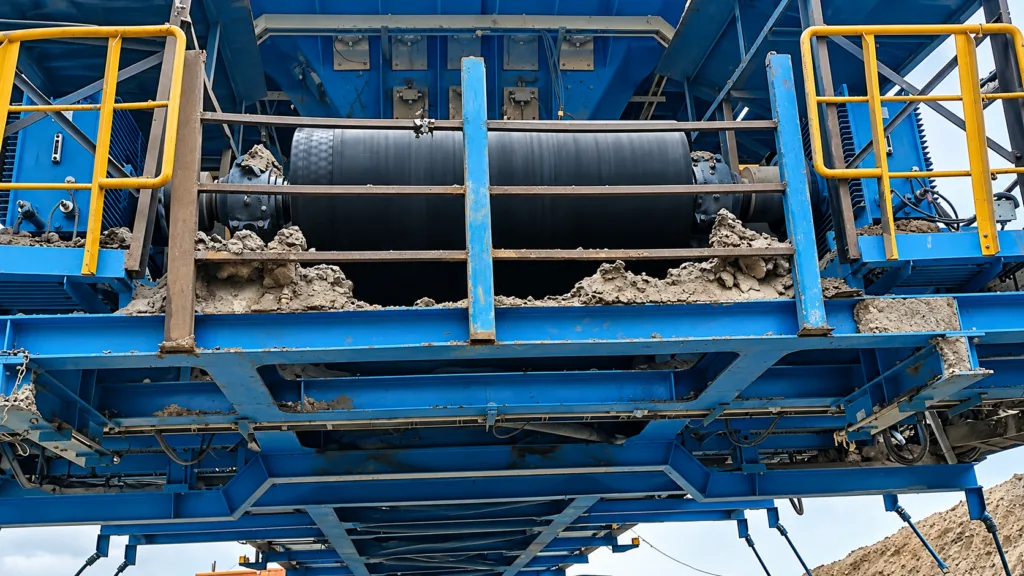
- Friction between the belt and supporting components
- Changes in material flow and environmental conditions
This is why adjusting a single idler does not always solve a persistent tracking problem.
2. Seven Common Causes of Conveyor Belt Mistracking
Cause 1: Off-Center Material Loading
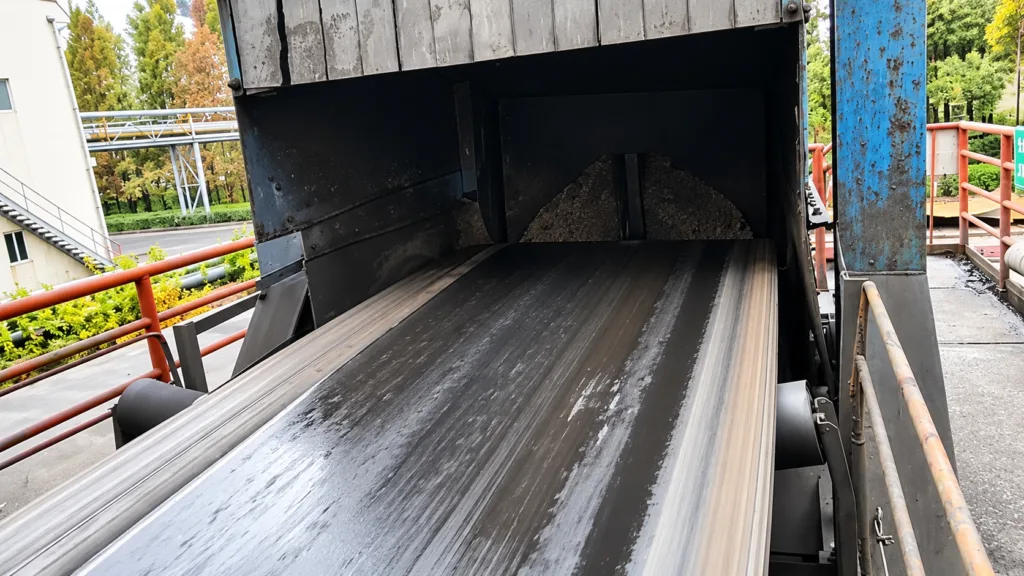
One of the most common causes of conveyor belt mistracking is uneven material loading.
When bulk material lands predominantly on one side of the belt, its weight and the forces generated through the loading zone can influence the belt’s position.
The problem may be particularly noticeable when the material flow changes.
For example, a belt may run correctly when empty but move sideways as soon as ore begins entering the conveyor.
This can occur because of:
- Poorly positioned discharge chutes
- Changes in material flow direction
- Uneven distribution of coarse and fine particles
- Excessive loading on one side
- Inconsistent feed conditions
What to check: Compare the belt’s position under loaded and unloaded conditions. Examine the material stream, its landing position and the condition of the loading zone.
Possible corrective actions: Improve material centering, review chute geometry and stabilize the feed conditions. An appropriately designed tracking system may provide additional control, but it should not be used to conceal a persistent loading problem.
Cause 2: Misaligned Pulleys or Idlers
A belt is continuously influenced by the rotating components supporting and guiding it.
If a pulley is not square to the conveyor centerline, or an idler frame is incorrectly positioned, the belt may experience a lateral steering force.
These forces can accumulate as the belt travels along the conveyor.
Common contributors include:
- Pulley misalignment
- Idler frames installed out of square
- Uneven idler height
- Structural movement or foundation settlement
- Components displaced during maintenance
What to check: Examine the relationship between the conveyor centerline, pulley shafts and idler frames.
The inspection should focus on the area where mistracking first develops, not only where the belt eventually contacts the structure.
Possible corrective actions: Restore the correct component alignment and verify the conveyor structure against its design requirements.
Repeatedly steering idlers away from their correct positions may temporarily change the belt’s path while introducing additional friction and wear.
Cause 3: Material Build-Up on Rollers and Pulleys
Carryback can create conveyor tracking problems even when the original conveyor alignment is correct.
Material remaining on the return side may accumulate around idlers, bend pulleys or other rotating components.
This build-up changes the effective contact surface and can create uneven forces across the belt.
Typical symptoms include:
- Gradual changes in belt position
- Irregular running after wet or sticky material is introduced
- Increased vibration or abnormal roller contact
- Tracking problems that become worse between cleaning intervals
What to check: Inspect return idlers, pulley surfaces, belt cleaners and areas where material can accumulate.
Possible corrective actions: Address the carryback source, restore effective cleaning and remove accumulated material under approved isolation procedures.
Where conventional cleaning is insufficient, the belt cover, material characteristics and cleaning arrangement may require a more comprehensive review.
Cause 4: Poor Splice Alignment or Belt Deformation
Not all tracking problems originate in the conveyor structure.
A belt with an improperly aligned splice, significant camber or other geometric irregularity may deviate as it travels through the system.
The resulting movement may follow a repeating pattern.
For example, the belt may shift at a particular point in its circulation and then return toward its normal running position.
Possible causes include:
- A splice that was not assembled squarely
- Uneven belt construction or deformation
- Localized damage affecting belt geometry
- Unequal changes in carcass or cover properties
What to check: Determine whether the tracking variation follows a particular section of belt rather than remaining associated with one fixed conveyor location.
Compare belt-edge position over successive revolutions and inspect the splice and affected belt section.
Possible corrective actions: Correct any confirmed belt or splice defect using an approved engineering procedure. Adjusting idlers cannot reliably compensate for every type of belt deformation.
Cause 5: Incorrect Belt Tension or Take-Up Behavior
Belt tension affects contact with pulleys and idlers, as well as the way the belt responds to steering forces.
Insufficient tension may contribute to slipping, excessive sag or unstable belt-to-idler contact.
An unsuitable take-up arrangement may also allow operating conditions to change as the conveyor starts, stops or varies its load.
At the same time, excessive tension can place unnecessary loads on the belt and conveyor components.
What to check: Review the specified operating tension, take-up position and travel, and whether tracking changes during starting, stopping or load transitions.
Possible corrective actions: Confirm that the take-up arrangement operates as designed and that actual belt tensions remain within the approved operating range.
Tension should not be increased simply because the belt is mistracking. The required setting must be determined from the conveyor design and operating conditions.
Cause 6: Belt Stiffness and Transition Geometry
Conveyor belt construction can also affect tracking.
A belt must carry longitudinal tension while remaining flexible enough to follow the conveyor’s pulley arrangement and troughing geometry.
Problems may develop where the belt changes from a flat profile at a pulley to a troughed profile over the carrying idlers.
If the transition length is too short, the pulley and idler elevations are unsuitable, or the carcass is excessively stiff for the arrangement, belt-edge and center tensions can become uneven.
In some conditions, the resulting deformation may contribute to unstable tracking, abnormal wear or cracking.
What to check: Review the belt’s carcass construction, troughability, transition length, pulley diameters and idler arrangement.
This is especially important when the original belt has been replaced with a different carcass type or strength rating.
Possible corrective actions: Verify that the belt construction is compatible with the conveyor geometry. Where necessary, review the transition design or belt selection rather than attempting to compensate through idler adjustments alone.
Cause 7: Changing Operating Conditions and Belt Direction
Some conveyors run correctly under normal conditions but become unstable when operating conditions change.
Examples include:
- Reversing conveyor direction
- Strong side winds on exposed overland conveyors
- Rain, water or frozen material affecting contact conditions
- Changes in loading patterns
- Unstable foundations
- Variations in the material being transported
Reversing conveyors deserve particular attention.
An idler arrangement that provides a corrective steering effect in one direction may not behave the same way when the belt runs in reverse.
What to check: Record whether mistracking occurs only during particular operating conditions, shifts, loading patterns or directions of travel.
Possible corrective actions: Select tracking arrangements suitable for the actual operating conditions, including bidirectional operation where required.
3. Conveyor Belt Tracking Troubleshooting: Start with the Symptoms
The location and timing of belt deviation can provide useful clues before any corrective action is taken.
| Observed symptom | Possible causes to investigate |
|---|---|
| Belt runs off-center only when loaded | Uneven loading, chute geometry, material segregation |
| Belt mistracks even when empty | Pulley/idler alignment, return-side conditions, belt geometry |
| Belt deviates at the same conveyor location | Local component alignment, build-up, structural geometry |
| Belt deviation follows a particular belt section | Splice alignment, belt camber or localized deformation |
| Tracking changes after belt replacement | Different carcass properties, splice geometry, tension or disturbed components |
| Belt mistracks mainly in reverse | Direction-sensitive steering arrangements or misalignment |
| Tracking becomes worse in wet conditions | Carryback, build-up or changing contact conditions |
These are diagnostic indicators, not definitive tests. Several causes can exist simultaneously.
A practical troubleshooting approach is to document the belt’s behavior under normal operating conditions, identify where the deviation first appears and then inspect the associated equipment under safe maintenance procedures.
Important: Never attempt to steer the belt by hand, clean moving components or make unauthorized adjustments near an operating conveyor. Physical inspection, cleaning and adjustment require appropriate isolation and control of hazardous energy. Any controlled running observations or commissioning tests must follow the site’s approved safety procedures.
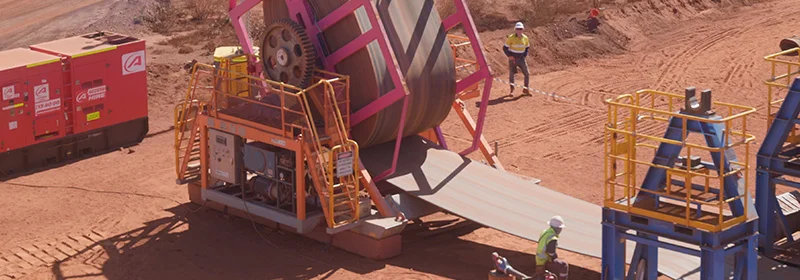
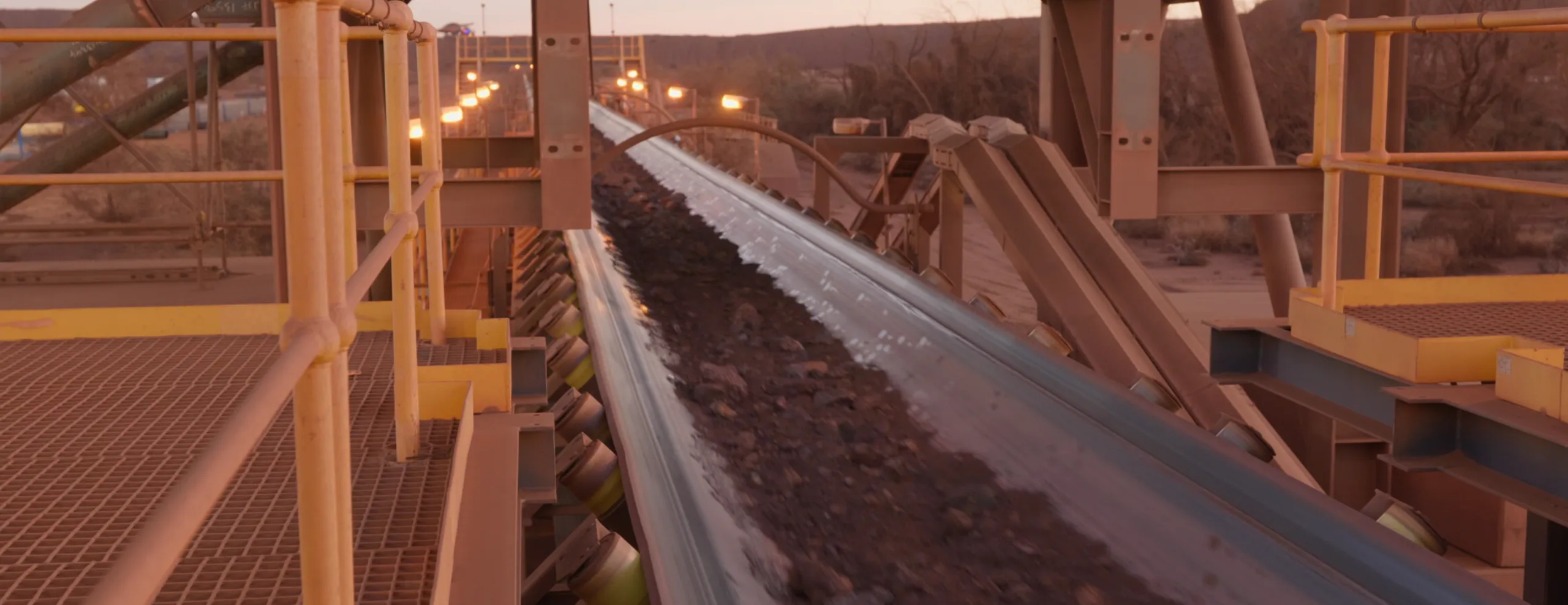
4. Field Application: Addressing Mistracking at an Australian Iron Ore Port
An iron ore port in Australia provides a useful example of why conveyor belt tracking is not always solved by adjusting the belt itself.
The site experienced repeated belt deviation associated with uneven material distribution at the loading point.
The problem involved two related but different conditions:
- Material was not always distributed evenly across the belt.
- The conveyor needed to maintain stable belt alignment as loading conditions changed.
Correcting only the belt position would not necessarily resolve the source of the disturbance.
Understanding the Loading Problem
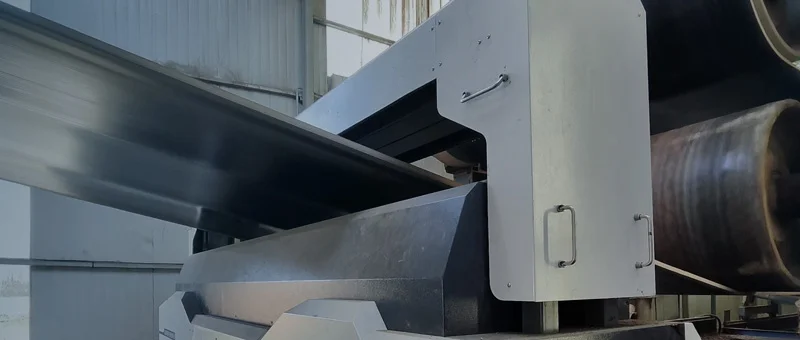
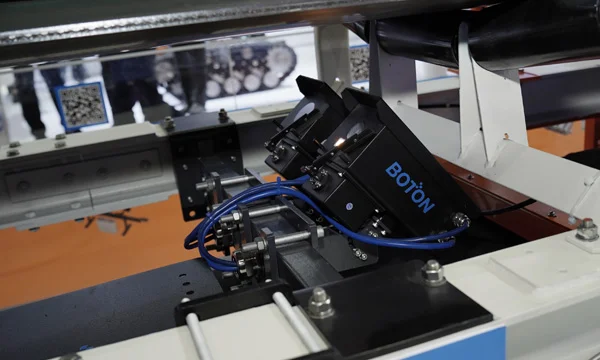
BOTON introduced its 3D Vision Dynamic Material Centering System to monitor both the belt position and the distribution of material on the belt.
The system provides information that can be used to identify off-center loading and support appropriate adjustment of material flow.
Rather than treating mistracking purely as a belt alignment issue, the approach considers the relationship between loading conditions and belt movement.
Correcting Belt Position
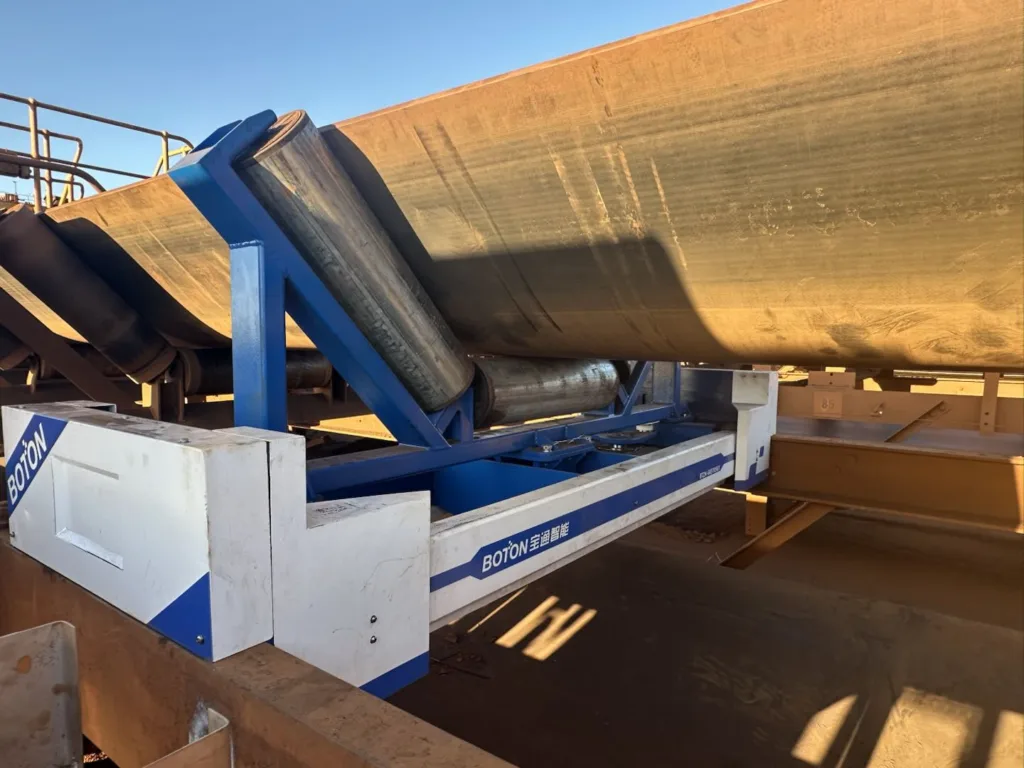
The application also uses BOTON’s AUTOTRACK™ intelligent conveyor belt tracking system to provide correction during operation.
The two technologies serve complementary purposes:
| Technology | Main function |
|---|---|
| 3D Vision Dynamic Material Centering | Identifies belt position and uneven material distribution to support loading corrections |
| AUTOTRACK™ Intelligent Tracking System | Monitors belt deviation and provides active tracking correction |
The distinction matters.
Monitoring material distribution helps identify a potential source of belt movement. Active belt tracking provides a means of correcting the belt’s position.
Together, they support a more comprehensive approach than relying on mechanical steering alone.
The full application is detailed in this 3D vision conveyor belt tracking case study , including the operating conditions and coordinated control approach.
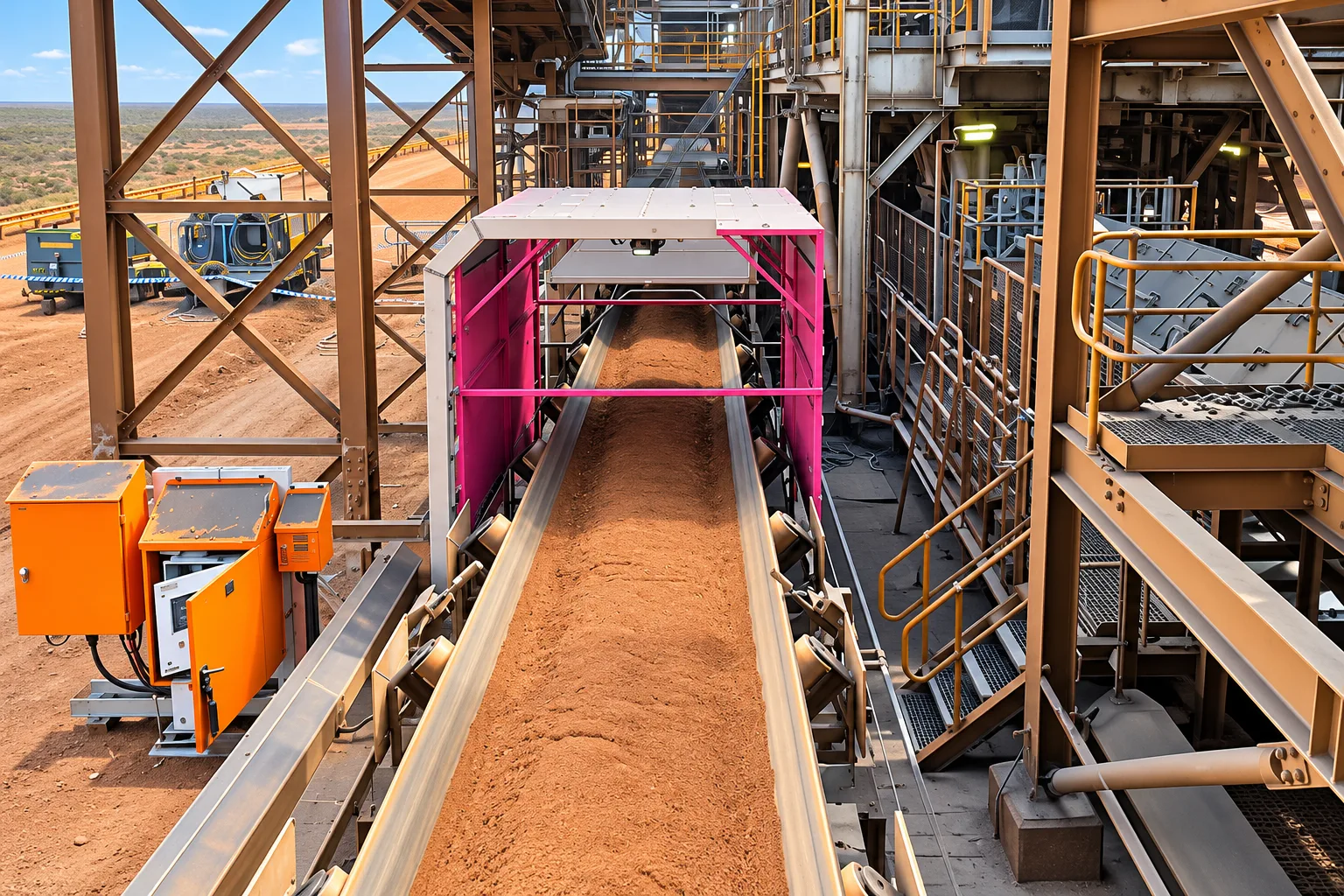
The published project information documents the application and technical approach but does not provide a verified numerical reduction in mistracking or downtime. Those results should not be assumed.
For more on the site’s operating context, see How to Reduce Conveyor Belt Downtime in Mining.
5. How Do Conveyor Belt Tracking Systems Work?
Tracking solutions generally work by identifying belt deviation, applying an appropriate corrective force or both.
The technologies differ in how they detect and correct belt movement.
Conventional Self-Aligning Idlers
Self-aligning idlers use changes in contact forces or a mechanical steering mechanism to influence the belt’s running direction.
When the belt moves off-center, the arrangement redirects the idler assembly so that contact forces encourage the belt to return toward its intended path.
These devices can be useful where the conveyor experiences manageable variations in tracking conditions.
However, the corrective action relies on forces transferred through contact between the belt and rollers.
Excessive steering angles, unsuitable installation or continued slipping can increase wear on the belt’s bottom cover and add running resistance.
This is particularly important for energy-sensitive long-distance conveyor systems.
A tracking device should improve belt stability without introducing unnecessary losses or damage.
Intelligent Conveyor Belt Tracking Systems
Intelligent systems combine belt-position detection with controlled corrective action.
Depending on the system configuration, they may provide:
- Continuous belt-position monitoring
- Automatic corrective adjustment
- Deviation alarms
- Event records
- Integration with conveyor control and shutdown functions
Such systems can be valuable where operating conditions change frequently or where manual inspection is impractical.
They do not eliminate the need for correct conveyor design, alignment and maintenance.
Belt Construction Designed for Improved Tracking Stability
Tracking performance can also be influenced by the belt itself.
Carcass structure, transverse stiffness and troughability determine how a belt responds to loading and contact with its supporting idlers.
For selected applications, belt construction can be engineered to improve running stability and reduce the tendency to move laterally.
However, construction-based solutions must be compatible with pulley diameters, transition geometry, conveyor tension and operating direction.
Changing the belt structure should follow an engineering assessment rather than being treated as a universal replacement for conventional tracking equipment.
Explore BOTON’s intelligent conveyor monitoring and tracking solutions.
6. Why More Tracking Rollers Are Not Always the Answer
Installing additional training idlers may appear to be a straightforward response to a wandering belt.
But there are important limitations.
Steering a belt requires forces that act through the contact between the belt and its supporting components.
If the arrangement generates excessive lateral forces or sliding at the roller contact surfaces, it can increase cover wear and operating resistance.
A conveyor may then appear better aligned while consuming more energy or wearing its bottom cover more quickly.
There is also a risk of treating the symptom rather than the cause.
For example:
- Misaligned idlers should be correctly aligned.
- Accumulated material should be removed and the carryback source addressed.
- Off-center loading should be corrected at the loading zone.
- An unsuitable belt construction should be reviewed against the conveyor design.
Tracking devices remain useful, but they are most effective when selected to address a specific, understood operating requirement.
The objective is stable belt operation—not simply forcing the belt back toward the centerline.
7. When Should You Consider an Intelligent Tracking System?
An intelligent tracking solution may be worth evaluating when a conveyor experiences persistent deviation despite correction of identifiable mechanical problems.
Potential applications include:
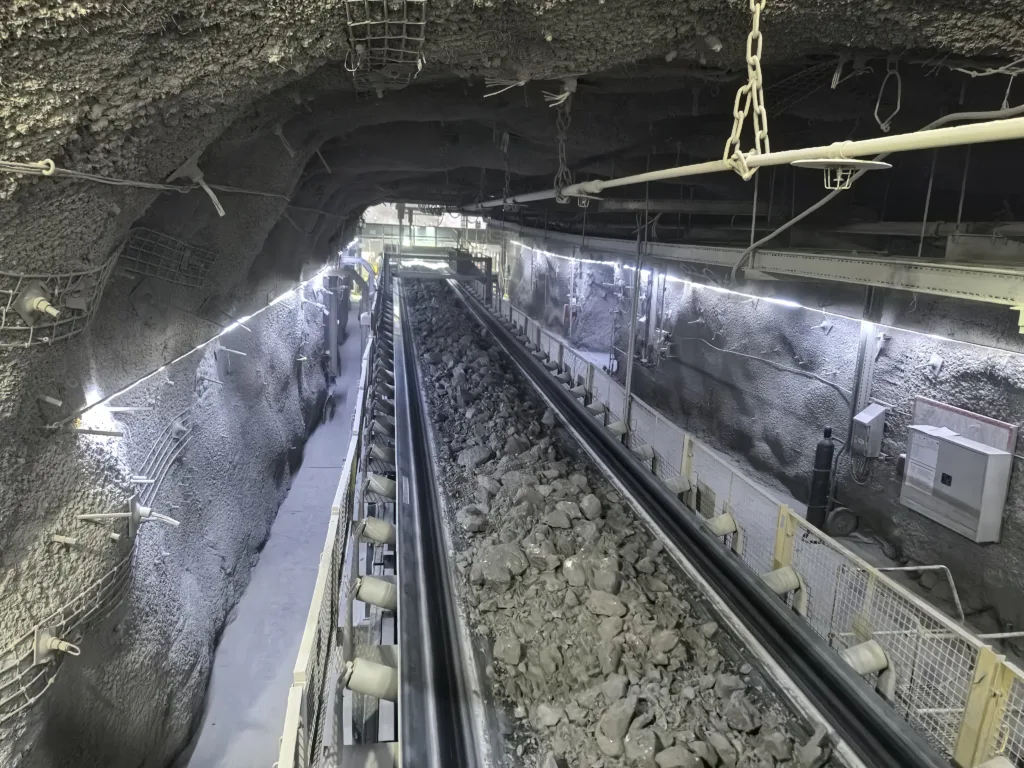
Long-distance overland conveyors. Continuous manual observation may be difficult, and localized mistracking can remain unnoticed until wear or damage develops.
High-capacity mining conveyors. Even short interruptions may have significant production consequences, making early detection and stable running particularly valuable.
Ports and bulk terminals. Variable feed conditions, different material streams and frequent operating changes can create fluctuating tracking demands.
Conveyors with limited inspection access. Remote monitoring can help operators recognize developing belt-position problems without relying exclusively on periodic patrols.
Systems with repeated edge damage. Recorded deviation patterns can help maintenance teams distinguish persistent conditions from isolated events.
Before selecting a system, establish the conveyor’s normal belt-position range, the conditions causing unacceptable deviation, the required corrective response and any control-system integration needs.
For critical conveyors, monitoring and corrective equipment should also have clearly defined alarm and intervention thresholds.
Frequently Asked Questions
How do you track a conveyor belt?
Start by identifying where and when the belt moves off-center. Check material loading, pulley and idler alignment, build-up, take-up behavior, belt condition and conveyor geometry. Correct confirmed underlying problems before making controlled tracking adjustments.
What is the most common cause of conveyor belt mistracking?
There is no single cause in every application. Off-center loading and component misalignment are frequent contributors, while carryback, splice defects, tension problems and changing operating conditions can also cause deviation.
Why does a conveyor belt track correctly when empty but not when loaded?
This often suggests a loading-related problem. Uneven material distribution or loading forces may influence belt position. Compare material placement and tracking behavior under different loading conditions before adjusting the idlers.
Can a conveyor belt track incorrectly because of the belt itself?
Yes. Splice misalignment, belt camber, deformation or a carcass construction incompatible with the conveyor may contribute to unstable tracking. The condition of the belt should be examined alongside the conveyor structure.
Do self-aligning idlers damage conveyor belts?
Properly selected and maintained self-aligning idlers can help control belt deviation. However, excessive steering forces, slipping contact or unsuitable installation can increase bottom-cover wear and running resistance.
Are automatic tracking systems suitable for reversing conveyors?
Some systems are designed for bidirectional operation, while others depend on belt travel direction. The equipment must be checked against the actual conveyor arrangement and operating requirements.
Fix the Cause, Not Just the Belt Position
Conveyor belt tracking is a system-level engineering problem.
Loading conditions, alignment, belt construction, tension and equipment condition all influence the path the belt follows.
When the source of mistracking is understood, maintenance teams can make better decisions about mechanical correction, loading improvements and automated tracking solutions.
BOTON works with mining and industrial operators on heavy-duty conveyor belts, intelligent monitoring and conveyor lifecycle services.
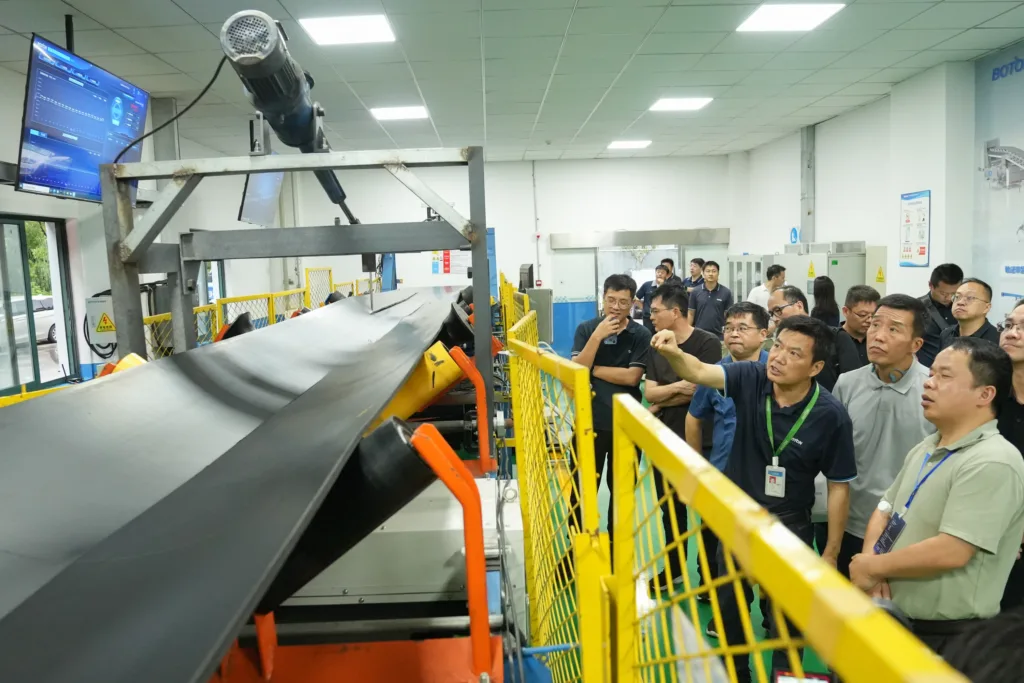
For recurring mistracking problems, our team can review the available conveyor information, operating conditions and monitoring requirements to identify suitable next steps.